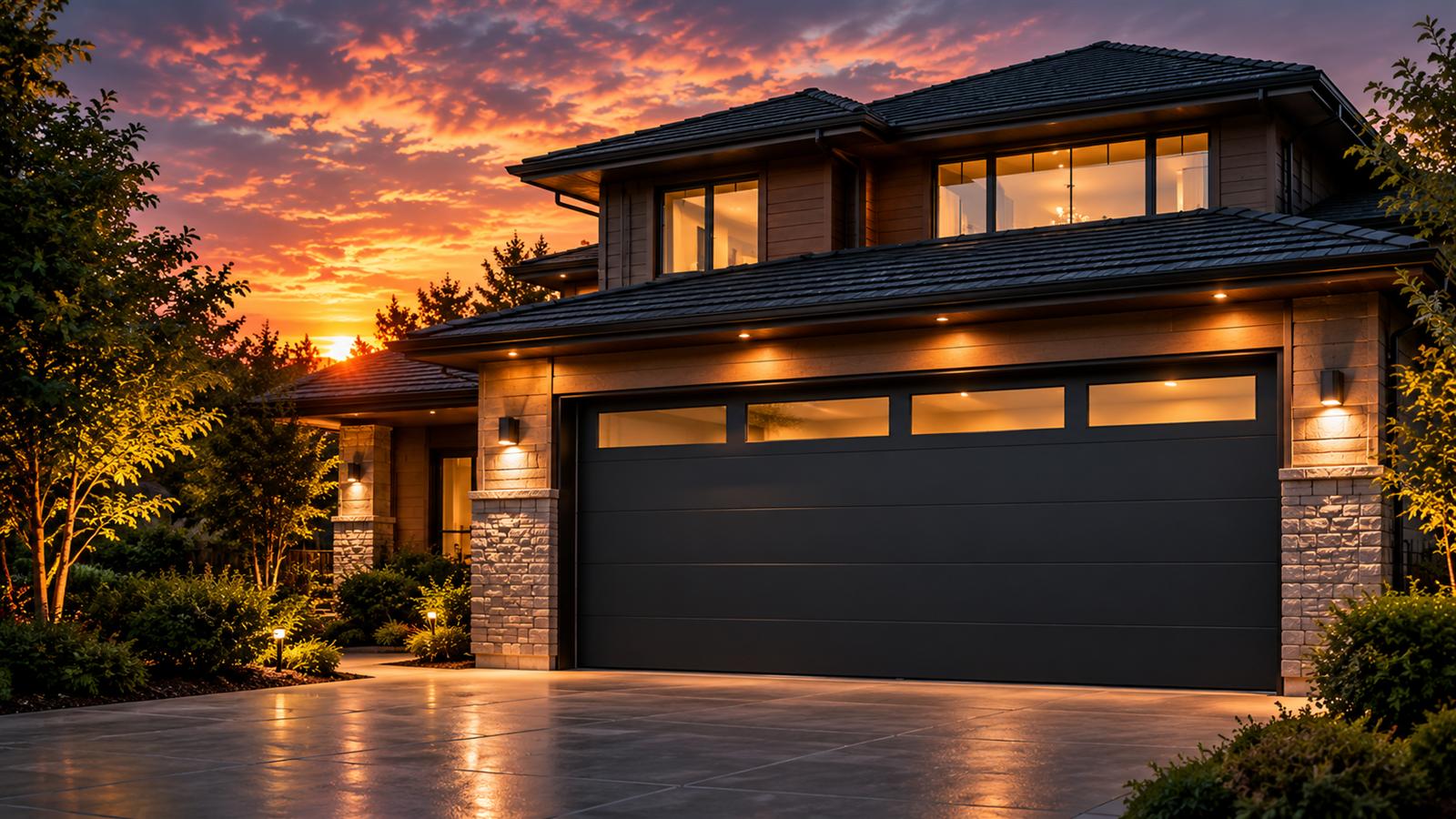
Replacement doors · insulated · carriage house
New Garage Door Installation
A new garage door changes how the whole front of a house looks, and it is one of the few exterior upgrades that also makes daily life quieter and easier. One call connects you with a local installer who can measure and give you options.
Sounds like this if
- Panels are dented, cracked, rotted or rusting through
- The door is uninsulated and the garage is freezing or baking
- Repairs keep coming back on an old door
- You are updating the outside of the house or getting ready to sell
Free to call · answered 24/7
Materials and styles
| Door type | Strengths | Trade-offs |
|---|---|---|
| Steel, non-insulated | Lowest cost, low maintenance | Dents easily, noisy, no thermal benefit |
| Steel, insulated | Quieter, stiffer, warmer garage | Costs more; check the stated R-value |
| Carriage-house style | Classic look suited to older Long Island and upstate homes | Overlays and windows add cost |
| Wood | Rich appearance, custom sizes | Heavy, needs regular refinishing, especially near salt water |
| Aluminum and glass (full-view) | Modern look, lots of light | Less insulation and privacy unless frosted or insulated glass |
| Composite / faux wood | Wood look with less upkeep | Mid to high price |
Common door sizes
| Size | Where you see it | Good to know |
|---|---|---|
| 8 x 7 ft | Single doors on many postwar homes | Tight for wide SUVs and pickups with mirrors |
| 9 x 7 ft | Single doors on newer homes | The most common single-door upgrade when the framing allows |
| 10 x 7 or 10 x 8 ft | Larger single doors | An 8-foot height clears roof racks and taller vans |
| 16 x 7 ft | Standard double doors | Heavier, with two torsion springs on most models |
| 18 x 7 or 18 x 8 ft | Wide double doors on newer homes | Needs a reinforced door and a strong opener |
Changing the size of the opening is a framing job, not just a door swap. It usually needs a new header and a building permit, and often a general contractor working alongside the door installer.
Insulation is about more than heat
Insulated doors are built as a sandwich, usually steel skins with polystyrene or polyurethane foam in between. Polyurethane is injected and bonds to both skins, which makes a stiffer, quieter door. Manufacturers list an R-value, but it is calculated in different ways, so compare doors within the same brand or ask the installer how it was measured.
For an attached garage under a bedroom, an insulated door makes a noticeable difference in winter. It also helps the door resist dents from basketballs and bikes, and it makes the door quieter when it runs.
Wind ratings near the coast
Large garage doors act like sails in a storm. When a garage door fails in high wind, the pressure inside the house can spike and damage the roof. New York's residential building code requires garage doors to be designed for the local wind load, and parts of Long Island, particularly near the South Shore and the East End, have some of the highest design wind speeds in the state.
If you live near the water, ask the installer about the wind rating of the door and whether your town or village building department needs a permit or wind-load documentation. Our salt air and wind guide covers this in more detail.
What a proper installation includes
Measure the opening
Width, height, headroom above the opening, side room for the tracks and the depth of the garage.
Remove the old door safely
The old springs are unwound before anything is unbolted. Disposal is normally included, but ask.
Install new tracks, springs and hardware
Springs are sized to the new door weight. Reusing old springs on a heavier new door is a shortcut to avoid.
Weather seal
A new bottom seal, and usually new perimeter stop molding, keeps out water, leaves and drafts.
Balance, connect and test
The door is balanced, the opener is reconnected or replaced, and the auto-reverse is tested.
What new doors usually cost
As a rough guide only, an installed standard single steel door is often in the low thousands of dollars, and a double insulated steel door somewhat more. Carriage-house styles, windows, custom colors, wood and full-view glass doors can cost several times as much. The installer you are connected with will measure and give you their own written price. In New York, home improvement contracts over $500 must be in writing.
Windows, colors and hardware
Small details change how a door looks from the street more than most people expect. A row of windows in the top section lets light into the garage while keeping privacy, and on a carriage-style door the window pattern is usually what sets the style. Frosted, seeded or obscure glass hides what is stored inside. Decorative handles and strap hinges are mostly cosmetic, but they make a plain steel door look like a swing-out carriage door.
Color matters too. Dark colors absorb more heat on south- and west-facing doors, and some manufacturers limit dark colors on certain models or recommend insulated versions, because heat can make thin steel skins bow. Ask whether the color you like is a factory finish or a paint job after installation, and what the finish warranty covers.
Questions to ask before you sign
- What exact model, thickness and insulation is quoted, and what is the stated R-value?
- Are new springs, tracks, rollers, cables and a bottom seal included, or are any old parts being reused?
- What cycle rating do the springs have, and are high-cycle springs an option?
- Is removal and disposal of the old door included?
- Is a building permit needed, and who applies for it?
- What are the warranties on the door, the springs, the hardware and the labor, and who honors them?
- On Long Island: what is your county home improvement license number?
New York's General Business Law requires a written contract for home improvement work over $500, which includes almost every new garage door. The contract should describe the work, the materials, the price and the approximate start and completion dates.
Where calls are connected
Calls about new garage doors are taken across Long Island and upstate New York. On Long Island: Nassau County and Suffolk County. Upstate: Albany, Rensselaer, Saratoga, Schenectady, Warren, Washington, Columbia, Greene, Schoharie, Montgomery, Fulton, Otsego, Delaware counties.
Questions
New garage doors: questions
How long does a garage door installation take?
A standard single or double door is usually installed in half a day to a day once the door arrives. Custom and wood doors can take several weeks to be built.
Do I need a permit to replace a garage door?
It depends on where you live. Some towns and villages want a permit for a new door, especially near the coast, and others do not for a like-for-like replacement. The installer or your building department can tell you.
Should I replace the opener at the same time?
If the opener is more than about 10 years old, many people do, because the installer is already there and the new door may be heavier or quieter than the old one.
Can a garage door be installed in winter?
Yes. Installers work year round, and the old door is usually out and the new one in on the same day, so the garage is not left open overnight. Very cold weather can make seals stiff, so the installer may come back to fine-tune the bottom seal and opener limits.
Will an insulated door keep my garage warm?
It helps, but a garage also loses heat through its walls, ceiling, windows and the gaps around the door. An insulated door with good perimeter and bottom seals makes the biggest difference in an attached garage that already has insulated walls.
What is a high-lift track?
It is a track that runs further up the wall before turning toward the ceiling, so the door sits higher when open. It suits garages with tall ceilings, car lifts or overhead storage, and usually needs a wall-mount opener or a different opener setup.
Related
Often needed at the same time
Need help with new garage doors?
Call (914) 353-8667. Answered day and night.